Discover the historical and spiritual importance of the Seven Churches of Revelation mentioned in the New Testament.
In the Book of Revelation, the Apostle John received divine messages for seven churches in the Roman province of Asia — all located in what is now western Turkey. These weren't random selections; they were thriving early Christian communities along a major Roman postal route. Today, visiting these ancient sites offers a profound journey through the foundations of Christianity.
Each church received a specific message of commendation, correction, or warning. Understanding these messages alongside the archaeological remains brings the biblical text to vivid life.
1. Ephesus — The Church That Lost Its First Love
Biblical Message (Revelation 2:1-7)
The church at Ephesus was commended for its hard work, perseverance, and intolerance of false apostles. However, it received a sobering warning: "You have forsaken the love you had at first." The message urged the Ephesian believers to remember, repent, and return to their initial passion for faith.
The Site Today
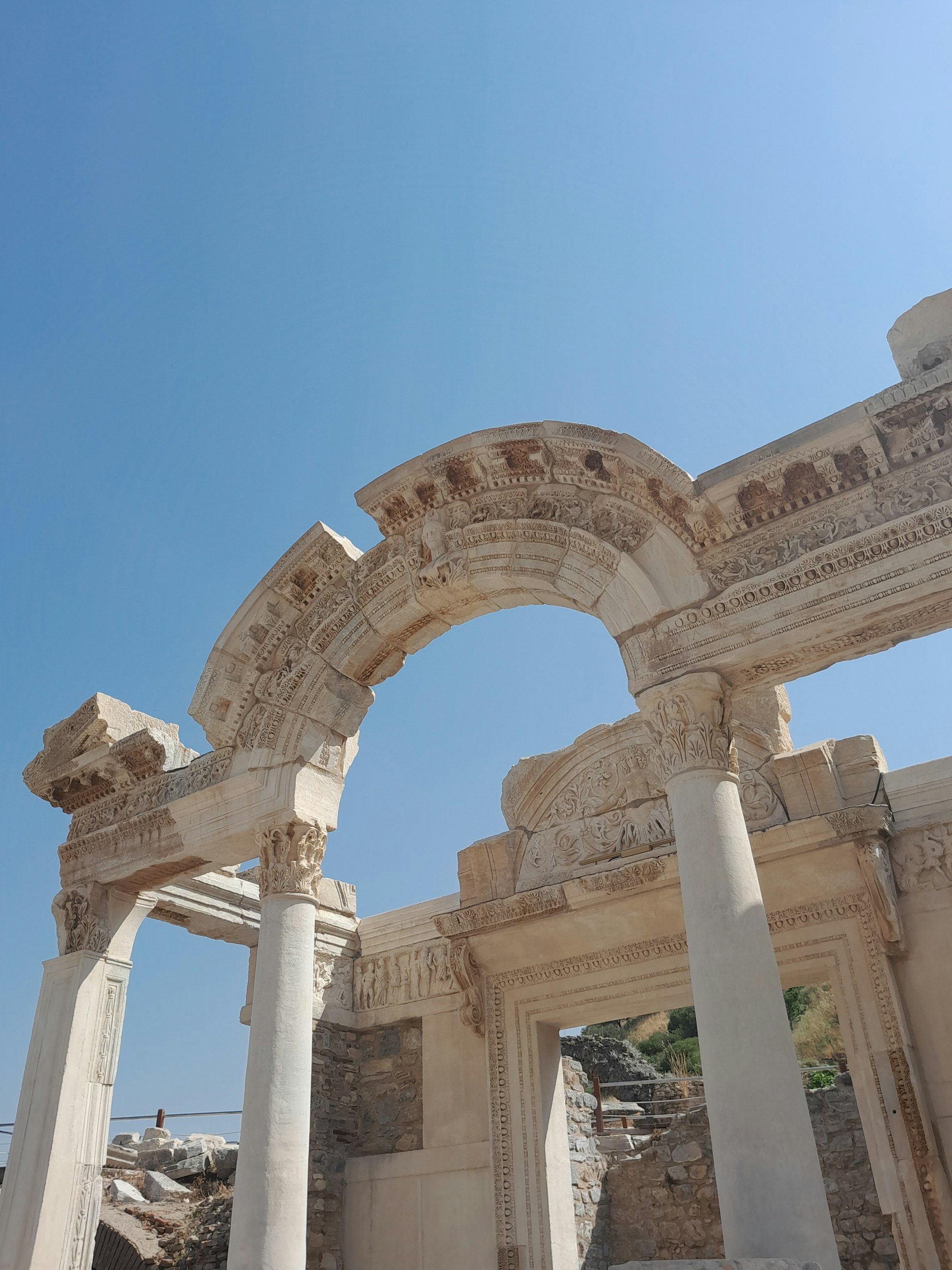
Ephesus is the most spectacular of the seven sites, with extensive ruins including the Library of Celsus, the Great Theatre, and marble-lined streets. The remains of the Church of Mary (believed to be the first church dedicated to the Virgin Mary) and the nearby House of the Virgin Mary are important pilgrimage destinations. The site also connects to Paul's ministry and his Letter to the Ephesians.
2. Smyrna — The Suffering Church
Biblical Message (Revelation 2:8-11)
Smyrna received only praise and encouragement. Despite poverty and persecution, the church was called spiritually rich. The message promised: "Be faithful, even to the point of death, and I will give you life as your victor's crown." Smyrna's Bishop Polycarp, a disciple of the Apostle John, was famously martyred here around 155 AD.
The Site Today
Modern-day İzmir, Turkey's third-largest city, stands on the site of ancient Smyrna. The Roman Agora (marketplace) has been partially excavated and is open to visitors. While much of ancient Smyrna lies beneath the modern city, the agora's columns and arches offer a tangible connection to the early church's world.
3. Pergamon — Where Satan's Throne Was
Biblical Message (Revelation 2:12-17)
Pergamon's church was described as dwelling "where Satan has his throne" — likely referring to the massive Altar of Zeus or the city's role as a center of emperor worship. Despite this hostile environment, the church held fast to its faith. However, some members were criticized for following the teachings of Balaam and the Nicolaitans.
The Site Today
The dramatic hilltop acropolis of Pergamon is one of Turkey's most impressive archaeological sites. The steepest theatre in the ancient world, the foundations of the great library, and the ruins of temples create a powerful atmosphere. The Asklepion (healing center), connected by a sacred way from the city, adds another dimension to the site. Many scholars believe the "throne of Satan" reference points to the Great Altar, whose base still remains on the acropolis.
4. Thyatira — The Compromising Church
Biblical Message (Revelation 2:18-29)
Thyatira was praised for its love, faith, service, and perseverance — and for growing in these qualities. However, the church was criticized for tolerating a false prophetess called "Jezebel" who promoted sexual immorality and eating food sacrificed to idols. The city was known for its trade guilds, which often required participation in pagan rituals.
The Site Today
Modern Akhisar sits atop ancient Thyatira. The archaeological remains are modest compared to other sites — fragments of a colonnaded road, a basilica, and scattered ruins in the city center. However, the site is significant as it connects to Lydia, the seller of purple cloth mentioned in Acts 16:14, who was from Thyatira. The city's fame for purple dye production is well-documented historically.
5. Sardis — The Dead Church
Biblical Message (Revelation 3:1-6)
Sardis received one of the harshest messages: "You have a reputation of being alive, but you are dead." The church appeared vibrant on the surface but was spiritually complacent. The metaphor of a thief coming unexpectedly was especially pointed — ancient Sardis had been conquered twice because its defenders fell asleep on watch, confident in their seemingly impregnable hilltop fortress.
The Site Today
The ruins at Sardis (modern Sart) are among the most impressive of the seven churches. The massive Temple of Artemis, the beautifully restored Gymnasium-Bath complex, and the ancient synagogue (one of the largest ever found in the ancient world) are extraordinary. The Pactolus River, where King Croesus — famed for his legendary wealth — discovered gold, flows nearby.
6. Philadelphia — The Faithful Church
Biblical Message (Revelation 3:7-13)
Like Smyrna, Philadelphia received only praise. Despite having "little strength," the church kept Christ's word and did not deny His name. The famous promise of an "open door" was given to this church: "See, I have placed before you an open door that no one can shut." Philadelphia was also promised protection from the "hour of trial."
The Site Today
Modern Alaşehir occupies the site of ancient Philadelphia. Archaeological remains are limited — the most notable is the remnant of a Byzantine church wall with brick arches, known locally as the Church of St. John. The city sits in a seismically active region, and ancient Philadelphia was repeatedly damaged by earthquakes, which gives context to the Revelation promise of being made a "pillar in the temple of my God."
7. Laodicea — The Lukewarm Church
Biblical Message (Revelation 3:14-22)
Laodicea received the most famous rebuke: "Because you are lukewarm — neither hot nor cold — I am about to spit you out of my mouth." The wealthy city's self-sufficiency had infected its church. The imagery was locally resonant: nearby Hierapolis had hot springs, and Colossae had cold mountain water, while Laodicea's water arrived lukewarm through aqueducts. The church was counseled to buy "gold refined in fire" and "white clothes" — ironic advice for a city famous for its banking and black wool textile industries.
The Site Today
Laodicea, near modern Denizli, has undergone extensive excavation in recent years and is now one of the most actively developing archaeological sites in Turkey. Major structures include two theatres, a stadium, several churches, and — significantly — the remains of the water distribution system that delivered the famously lukewarm water. The nearby travertine pools of Pamukkale and the ruins of Hierapolis make this an especially rich area for visitors.
Walking in the footsteps of the early Christians through these seven sites is more than a historical tour — it's a spiritual journey that connects the words of Scripture to the physical places where faith was tested, refined, and persevered.
Planning Your Seven Churches Journey
All seven churches can be visited in a 4-5 day circuit through western Turkey. The route follows a natural loop that ancient messengers would have traveled, starting from Ephesus and moving north through Smyrna and Pergamon, then inland through Thyatira, Sardis, Philadelphia, and ending at Laodicea. This journey combines profound spiritual significance with some of Turkey's most impressive archaeological sites.
Whether you're a pilgrim seeking spiritual connection or a history enthusiast fascinated by early Christianity, the Seven Churches of Revelation offer an unforgettable experience that bridges the ancient and modern worlds.